
How it's made
Cutting & Stitching — How a Shoe Upper Is Built
How footwear uppers are made — cutting panels to pattern and direction, skiving, stitching with controlled stitch density, reinforcement and first-article checks — explained from the DOING production floor.
The upper is the part of the shoe you see and touch most — and it’s where a surprising amount of the craft lives. Turning flat material into a clean, consistent 3D upper takes two disciplines done well: cutting and stitching. Here’s how we build an upper at DOING.
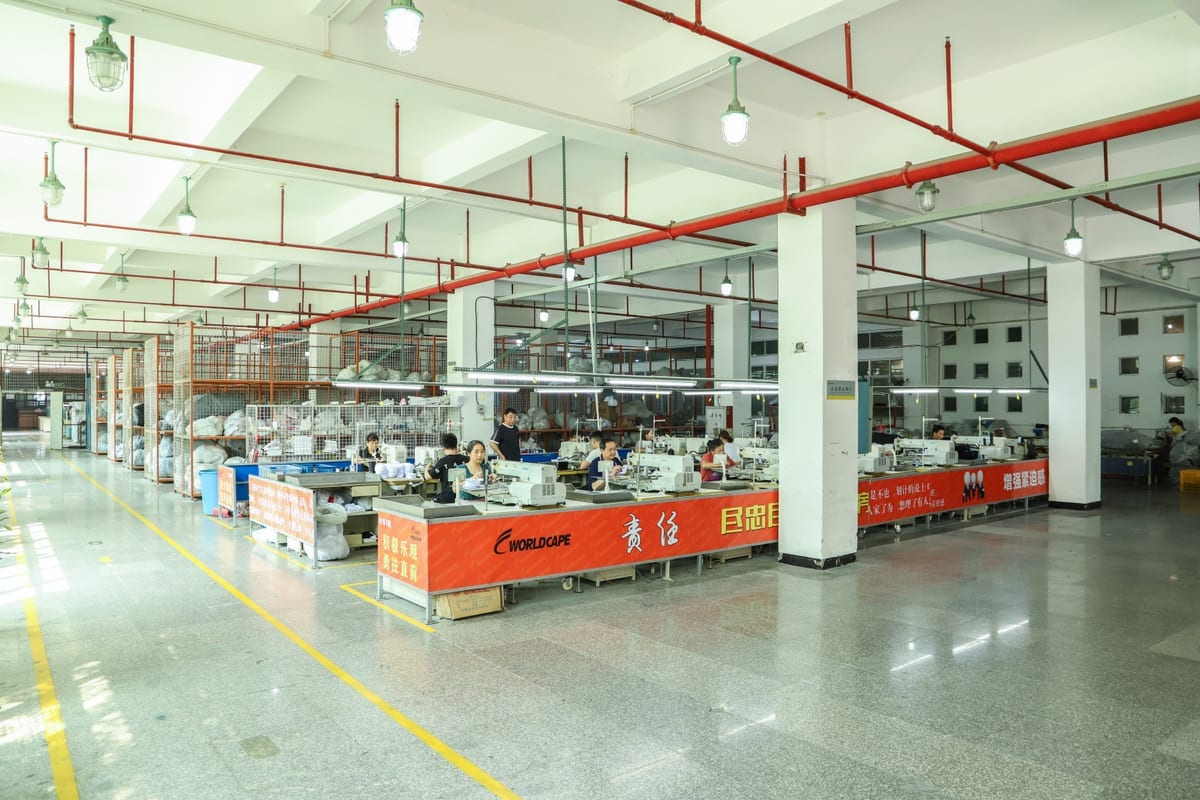
Cutting: getting the panels right
Every upper is made of panels — toe, vamp, quarters, tongue, linings, reinforcements — cut from leather, synthetics, mesh or textile. Three things decide whether cutting is done well:
- Pattern accuracy. Each panel is cut to the graded pattern for its exact size. Small errors compound once panels are stitched together.
- Cutting direction. Materials stretch differently along and across the roll. Panels are cut in the correct orientation so the finished upper holds its shape and fit instead of distorting after lasting.
- Matching across the pair. For materials like suede or nubuck, colour and nap direction are matched left-to-right so a pair looks identical.
We check cut layers, direction and quality at the table — because a flaw cut in here travels through every later stage.
Skiving and preparation
Before stitching, panel edges are often skived (thinned) so they fold cleanly and don’t create bulky, uncomfortable seams. Edges may be folded, taped or primed, and reinforcements added where the upper will take stress — around eyelets, the topline and the heel.
Stitching: turning 2D into 3D
At the stitching line the panels become an upper. Good stitching is about consistency:
- Stitch density — the right number of stitches per inch for the material (often 8–9 on sport/casual uppers, finer on leather).
- Edge distance — the seam sits a consistent distance from the edge, with parallel rows kept evenly spaced.
- Clean workmanship — no skipped stitches, no loose thread, no needle holes left where a seam was redone.
- Reinforcement — stress points and elastic or zip areas are reinforced so they last.
Overlays, logos, eyelets and trims are added here too, then the lining is joined so the inside is smooth with no ridges to rub the foot.
The first-article check
Before the full run starts, we build the first stitched upper of each style and colour and last it. That first article is compared against the approved sample — materials, stitch colour, construction and fit. If something’s off, it’s fixed before the line produces hundreds of pairs. This single step prevents most large-scale upper defects.
Where it goes next
A finished, checked upper moves to lasting and sole attachment, where it’s shaped over the last and joined to the sole. That’s covered here: Lasting & assembly →.
See the full picture in our pillar guide: How footwear is made →. Developing an upper with us? Get in touch.
Frequently asked questions
Why does cutting direction matter for shoe uppers?
Materials stretch more in one direction than another. Cutting each panel in the correct orientation controls fit, keeps the shape stable and prevents distortion after lasting, so the pair fits consistently.
What stitch density is used on shoe uppers?
It depends on the material and style — typically around 8–9 stitches per inch on sport and casual uppers, and finer on leather dress shoes. Consistent stitch density and edge distance are key quality markers.
What is a first-article check?
Before the line runs, the first stitched upper of each style and colour is built and compared to the approved sample. It catches pattern, material or workmanship problems before they are repeated across the whole order.
Sourcing footwear from China?
DOING is a footwear trading & manufacturing partner — OEM/ODM, development, QC and export. Tell us your product, market and MOQ.
Get a Quote