
How it's made
Lasting & Assembly — How the Upper Becomes a Shoe
How a shoe is lasted and assembled — shaping the upper over the last, attaching the sole, and the checks that keep a pair straight, symmetrical and well bonded. From the DOING factory.
Lasting is where a flat-looking upper finally becomes a shoe. It’s the stage that most decides fit and shape — and the one where construction choices lock in. Here’s how assembly works at DOING.
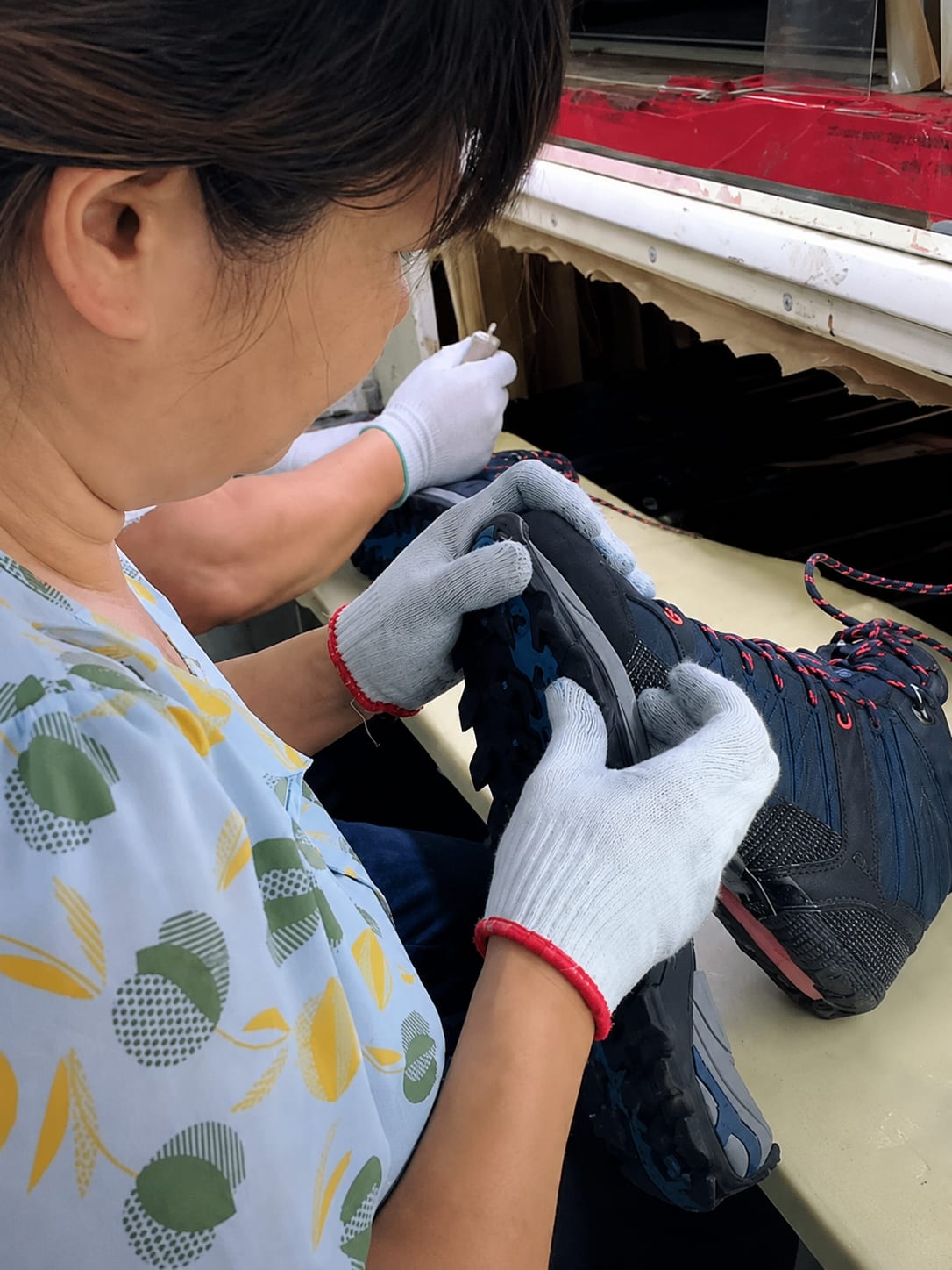
The last: the shape of the shoe
A last is the foot-shaped form a shoe is built around. It carries the fit — length, width, instep volume, toe shape and toe-spring. Before lasting, we check the last is the right model and size for the style, and that it’s smooth with no burrs that could mark or tear the upper.
Lasting: shaping the upper
The upper, with its insole board in place, is mounted on the last and pulled tight so it conforms to the shape. The toe, waist and heel are each lasted so the material sits smooth and even, with no wrinkles and the heel centred. Good lasting is what makes a pair fit consistently and look clean; poor lasting shows up as a crooked shoe, a loose topline or wrinkles across the toe.
Attaching the sole — and why construction matters
Once the upper is shaped, the sole is attached. The method defines the shoe’s look, performance and cost:
- Cement (glued) — surfaces are prepared and the sole is bonded to the upper with adhesive, then pressed. The most common and versatile construction, used across most categories.
- Vulcanized — a rubber sole is cured to the upper under heat and pressure, giving the classic canvas-sneaker look and a very strong bond.
- Injection — the sole material is moulded directly onto the lasted upper, fusing the two.
- Strobel — the upper is stitched to a fabric base, then a sole is attached; common in flexible athletic shoes.
We cover these in depth here: Outsole construction methods →.
The checks that matter
Assembly is inspected closely, because problems here are visible and hard to fix later. Among the things we look for:
- The upper-to-sole bond is fully closed — no gaps, no lifting edges.
- Glue is clean — no squeeze-out or stains.
- The shoe sits straight and symmetrical, heel centred over the sole.
- Left and right match in height, shape and toe position.
- No pressure points inside from the lasting process.
Finishing the pair
After assembly the shoe is cooled, the last is removed, and the pair moves to finishing and quality control — footbeds and laces in, threads trimmed, surfaces cleaned, and a final inspection before packing.
See the whole journey in the pillar guide: How footwear is made →. Ready to develop a shoe? Talk to our team.
Frequently asked questions
What is lasting in shoemaking?
Lasting is the stage where the upper is pulled tight over the last — the foot-shaped form — and shaped so it permanently takes that form. It sets the fit and shape of the finished shoe.
What is the difference between cement and vulcanized construction?
Cement construction bonds the sole to the upper with adhesive and is the most versatile method. Vulcanized construction cures a rubber sole to the upper under heat, giving the classic court-sneaker look and a very strong bond.
How do you check a shoe is well made after assembly?
We check that the upper-to-sole bond is fully closed with no gaps, that the shoe sits straight and symmetrical, that left and right match in height and shape, and that there is no excess glue — among many other points.
Sourcing footwear from China?
DOING is a footwear trading & manufacturing partner — OEM/ODM, development, QC and export. Tell us your product, market and MOQ.
Get a Quote