
Home / Testing & Quality Standards
Testing & quality standards
Footwear quality control and AQL inspection
Every DOING order is built to documented physical-testing and quality-control standards, maintained by our QC department and aligned to Chinese national (GB) and international norms. Here is what that means for your shipment.
Watch our tests
Real test footage
Short clips of actual tests we run — impact, electrical insulation and durability. Tap to play.
Inside our testing lab
Our in-house physical-testing lab, equipped with GOTECH instruments for flex, abrasion, tensile, aging, colourfastness and environmental testing.
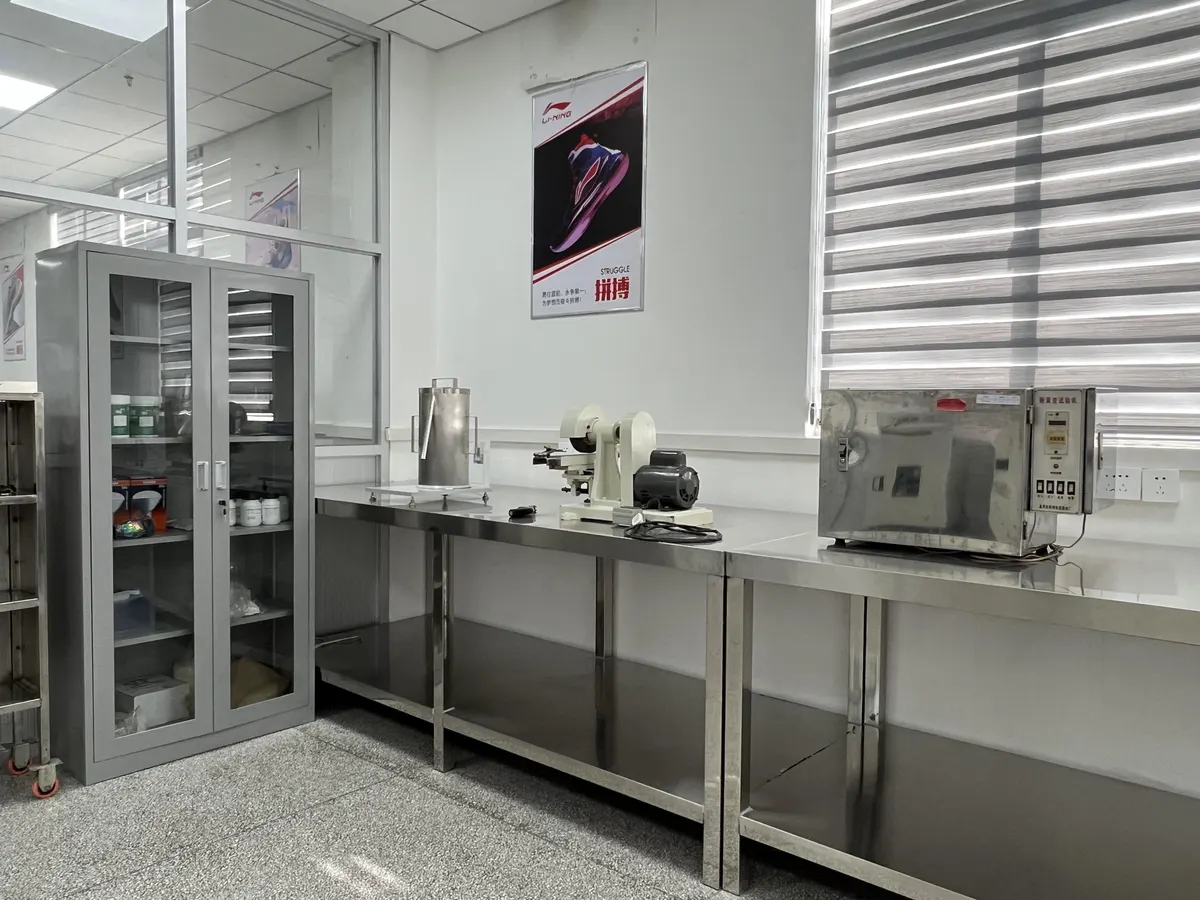
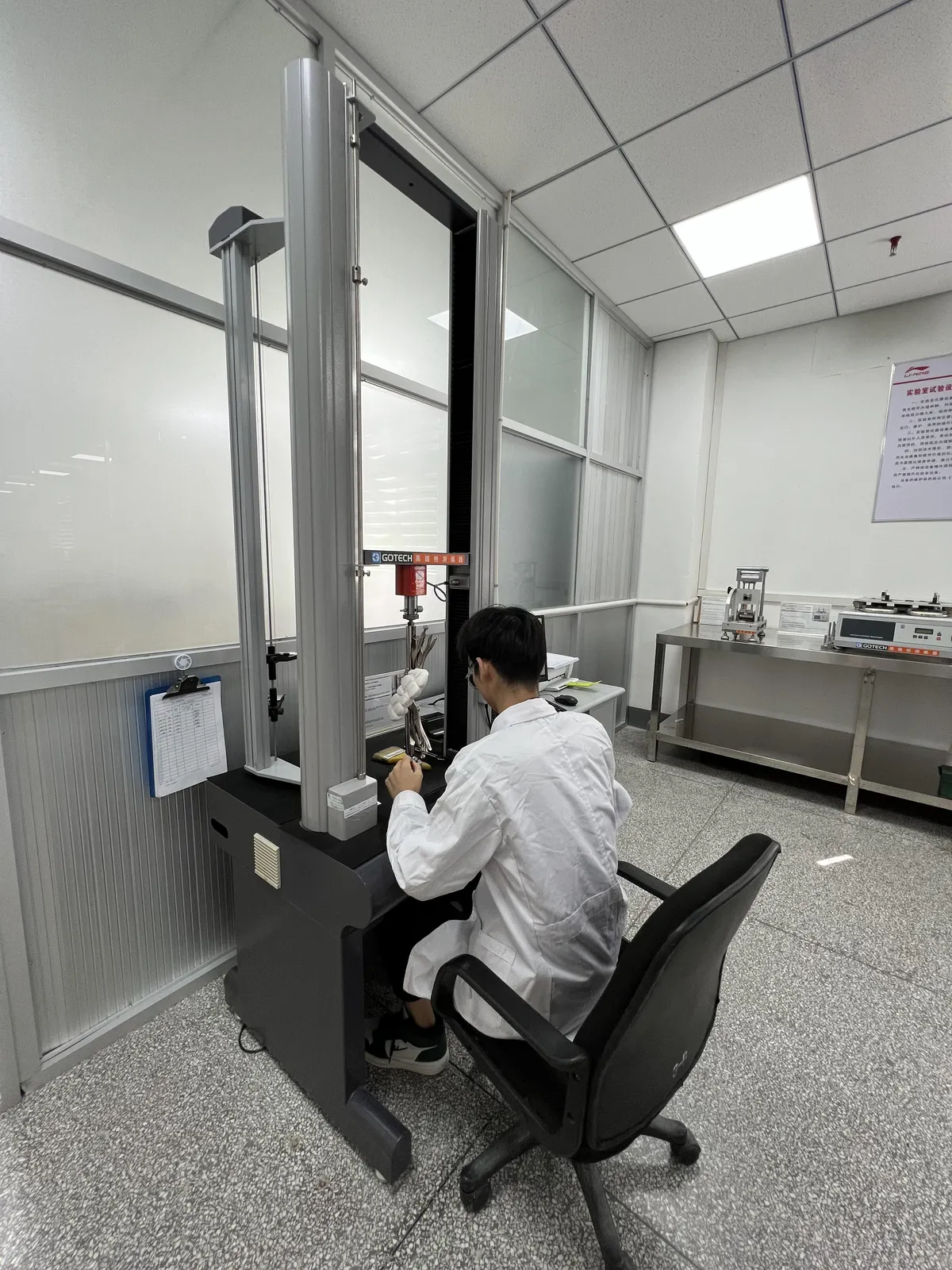
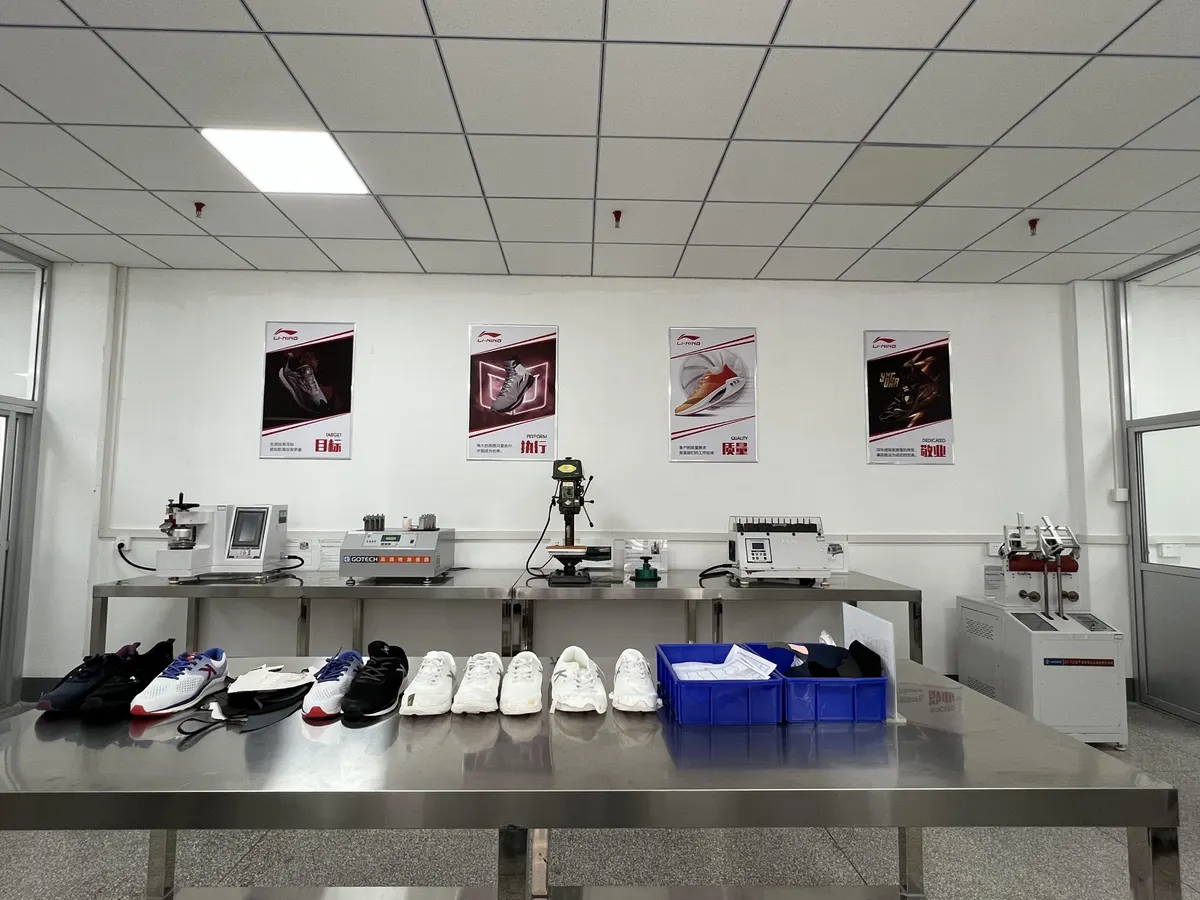
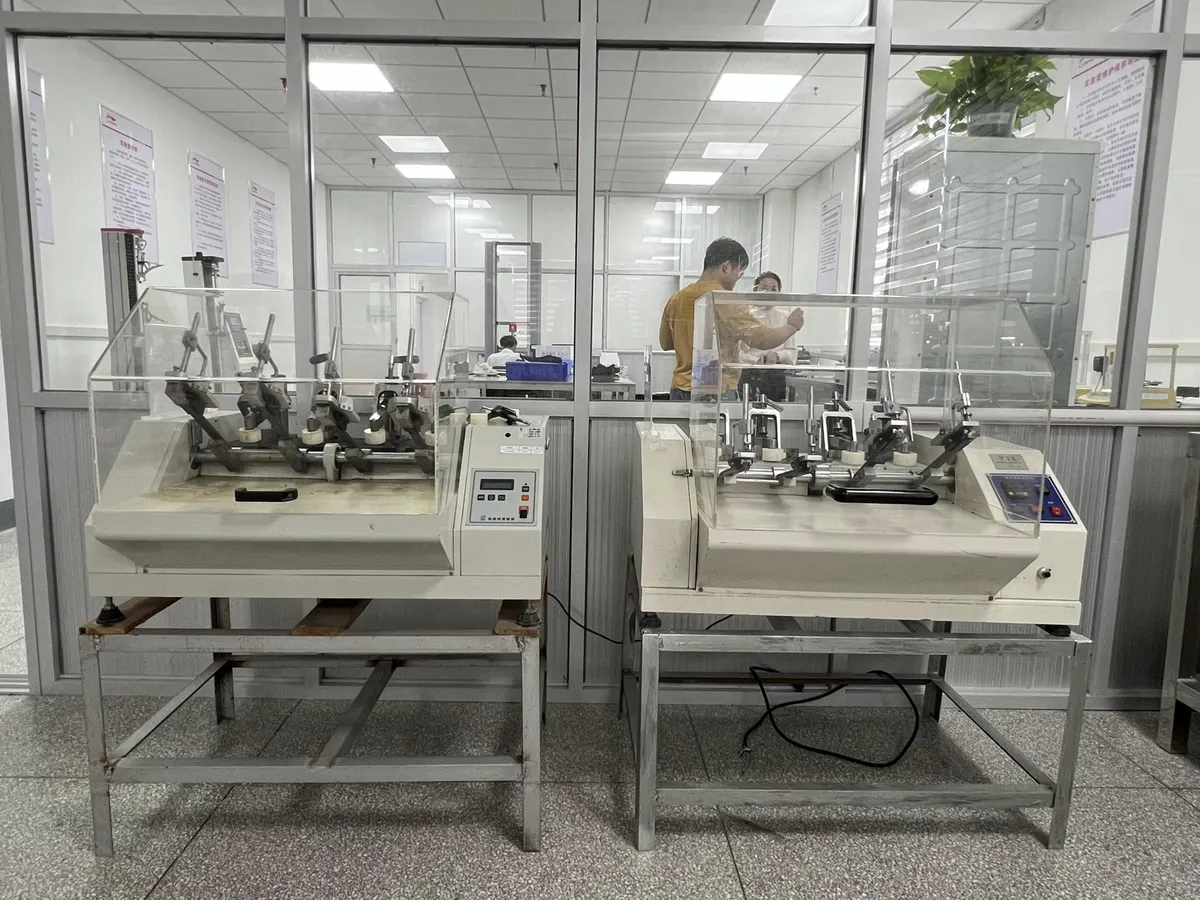
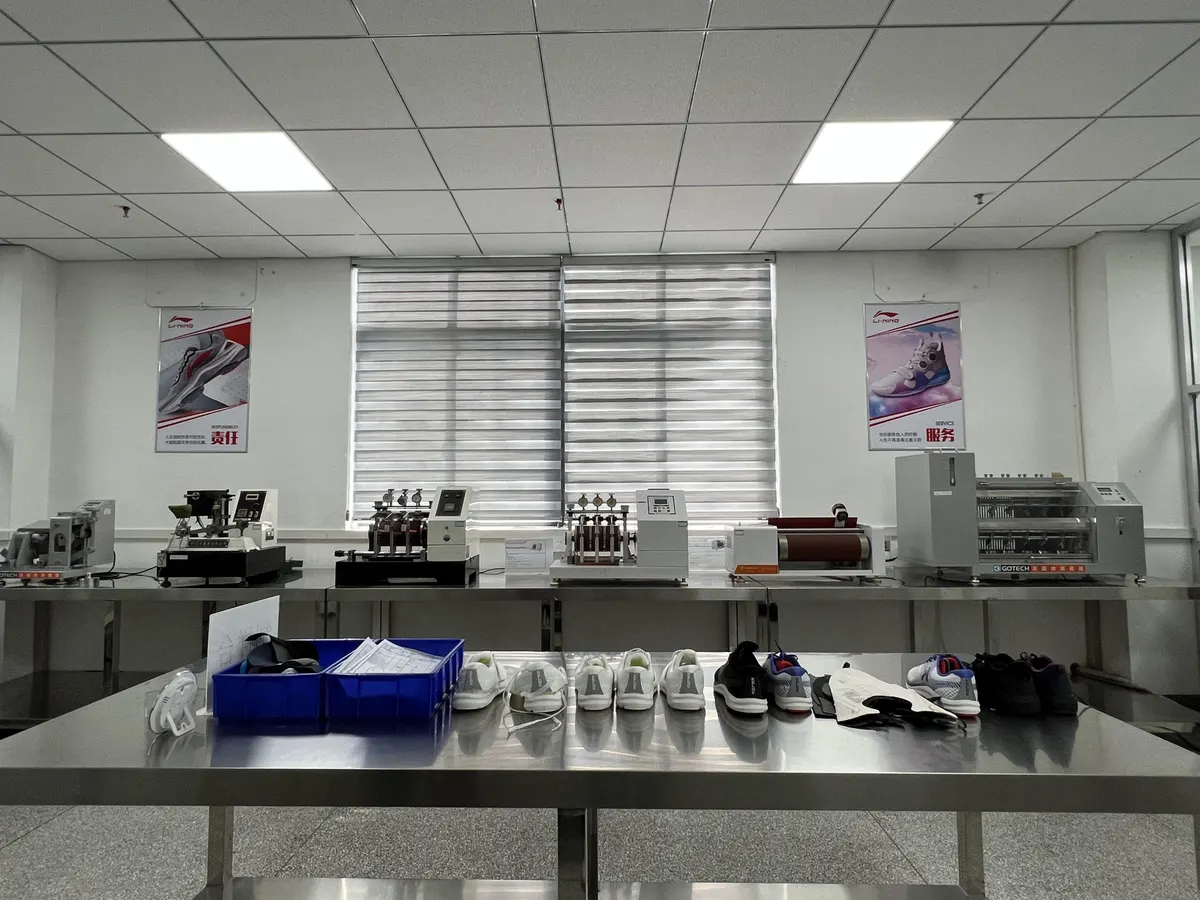
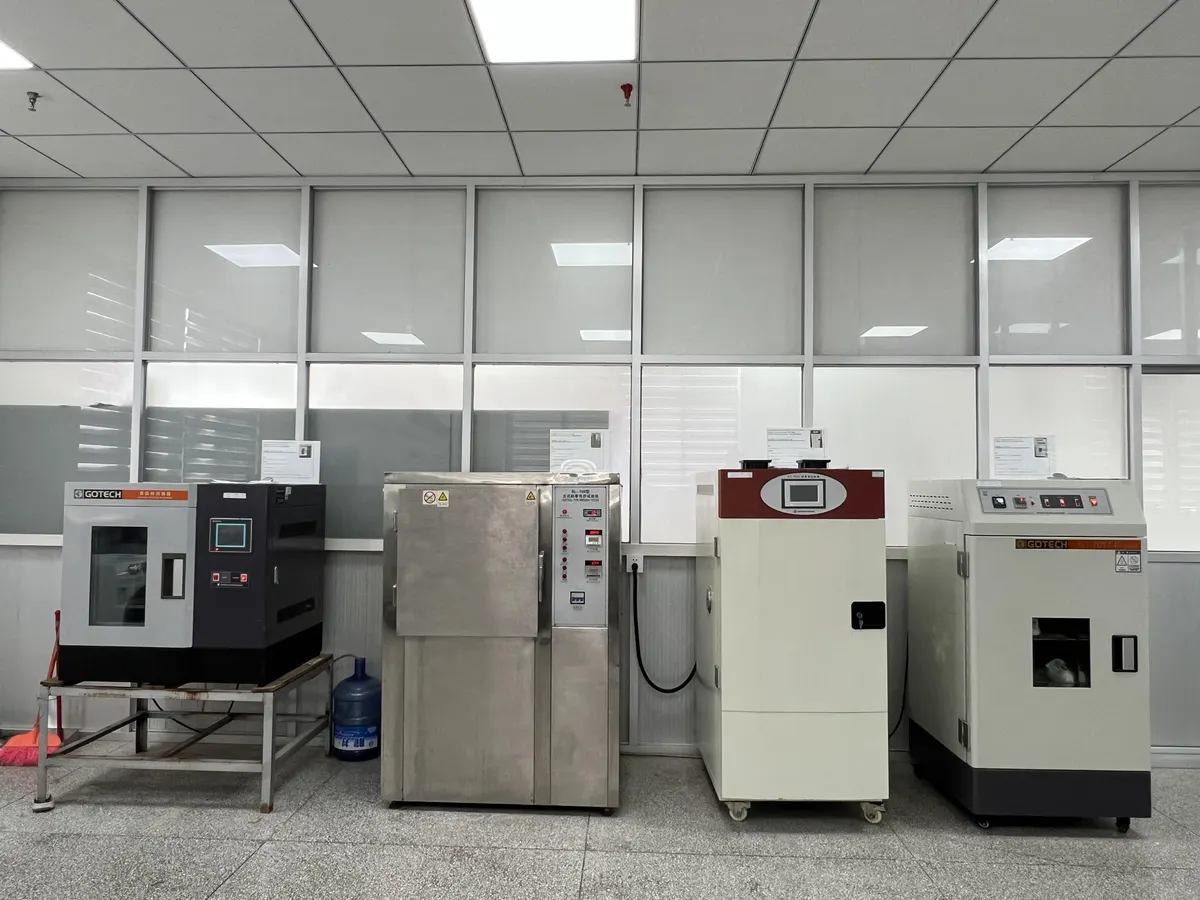
Physical testing
What we test
Materials and finished products are physically tested before and during production. (Our internal pass/fail tolerance tables are proprietary; the test programme below shows the scope we work to.)
Outsoles (RB, rubber, MD, TPR, IR, EVA, PU)
- Hardness (Asker-A / Shore)
- Density / specific gravity
- DIN abrasion
- Flex / bending resistance
- Cold-temperature flex (cracking)
- Compression set & rebound
- Yellowing / UV resistance
- Bond (peel) strength
Uppers & materials (mesh, leather, PU, nubuck, suede, PVC)
- Tensile / breaking strength
- Tear strength
- Elongation
- Rubbing colorfastness (dry & wet)
- Yellowing resistance
- Cold-temperature flex
- Hydrolysis resistance
- Bond (peel) strength
Components (velcro, counters, thread, laces, elastic, webbing, buckles, zippers, insoles)
- Hook-and-loop holding strength
- Counter (toe/heel) stiffness
- Thread & seam strength
- Lace / webbing tensile strength
- Elastic recovery
- Buckle & zipper durability
- Insole bond & colorfastness
Finished shoes & cartons
- Whole-shoe bond strength
- Outsole flex on finished shoe
- Slip / abrasion (where required)
- Pairing & dimensional checks
- Infant footwear (≤ size 30) specific tests
- Carton compression & marking
Process
Our 6-stage quality-control process
Order review & handover
QC confirms the full order pack — operation sheet, approved signed sample, logos/labels, sizing, last & outsole length, packaging spec — and signs it off with sales before anything starts.
Pre-production fit confirmation
Before mass production, QC confirms try-on samples for length, width, ground-contact point, toe-spring and comfort. Any fit issue stops production until resolved.
Full-size trial making
A full size run is trialled in two stages — paper-pattern trial and cutting-die trial — to catch any pattern or construction problem before bulk, and to confirm shared or custom outsole moulds fit the last.
Material confirmation & physical testing
Upper, outsole and packaging materials are confirmed against the approved sample and put through physical testing. Only materials that pass testing are released for purchase and production.
In-process first-article inspection
QC confirms a first article at each key stage — cutting, first stitched upper, first finished shoe and first packed unit — to prevent a fault being repeated across the whole order.
Final AQL inspection
After 100% in-line checking, QC personally selects cartons at random (non-consecutive) and inspects against AQL before shipment — to ensure no non-conforming product is mixed into the shipment.
Final inspection
AQL inspection & defect classification
Final inspection uses random, non-consecutive AQL sampling sized to the batch. Defects are graded and counted against agreed acceptance levels.
Critical / major
Defects that compromise safety, function or are visually unacceptable — e.g. a sharp object inside the shoe, broken upper, or cracked components. Inspected to a strict AQL of 0.065.
Minor
Defects that reduce quality but can be corrected — inspected at AQL 1.0.
Slight
Small cosmetic issues not affecting use — inspected at AQL 4.0.
A batch with any Class A defect is rejected. Where you have your own AQL level or market-compliance requirements, we align to them. For European buyers, see our REACH & RSL chemical compliance →. Also: factory & QC overview →.
FAQ
Testing & quality — questions
What physical tests do you run on footwear?
We physically test outsoles (hardness, density, DIN abrasion, flex, cold-flex, compression set, rebound, yellowing, bond strength), uppers and materials (tensile, tear, elongation, rubbing colorfastness, hydrolysis, bond), components, and finished shoes and cartons — to documented standards aligned to Chinese national (GB) and international norms.
What AQL standard do you inspect to?
Final inspection follows AQL sampling with a three-tier defect classification: Class A (critical/major), Class B (minor) and Class C (slight). We apply a strict acceptance level — Class A at AQL 0.065 — and inspect a random, non-consecutive sample sized to the batch.
Do you test before or after production?
Both. Materials are physically tested and confirmed before mass production, quality is controlled in-line during production, and a random AQL inspection is done before shipment.
Can you inspect to my own standard or AQL level?
Yes. Where you have your own AQL level, test requirements or market compliance needs, we align inspection and testing criteria to them.
Want our testing & QC standards for your product?
Tell us your category and market and we’ll share the relevant test programme and inspection criteria.
Contact Us